

Knowing when your home’s exterior needs attention can be tricky, especially when it seems like there’s no reason to do it yet. For Edmonton homeowners, mid-summer is usually one of the best times to check things over, since gutters, downspouts, windows, and siding have already been exposed to weeks of rain, dust, smoke, and seasonal buildup.
In this blog, we’ll break down the exterior warning signs Edmonton homeowners should watch for in mid-summer, from overflowing gutters to smoky, dusty windows, and explain when it may be time to get professional help.
Why Edmonton Homes Need Extra Exterior Maintenance in Mid-Summer
Edmonton homes deal with a lot by the middle of summer. Dry wind can coat windows with dust, smoky days can leave a dull film on glass, and sudden storms can push leaves, twigs, and roof debris into the gutters. Even if everything looked fine in spring, these small layers of buildup can start showing up on siding, walkways, downspouts, and exterior glass.
This is the point in the season when little exterior issues can become much easier to spot. A gutter can seem fine on a dry afternoon, then spill over during the next heavy rain, which is often when homeowners start thinking about gutter cleaning in Edmonton. Windows may only look a little dusty until the sun hits the glass and makes the whole room feel dull. A walkway might look like it just needs a quick rinse, but after rain, that same buildup can turn slick and grimy.
For Edmonton homeowners, this season is a good checkpoint. It gives you a chance to catch clogged gutters, downspout overflow, smoke-stained windows, and dirty exterior surfaces before they become harder to clean or more stressful to deal with later in the year.
What Are the Signs of Clogged Gutters?
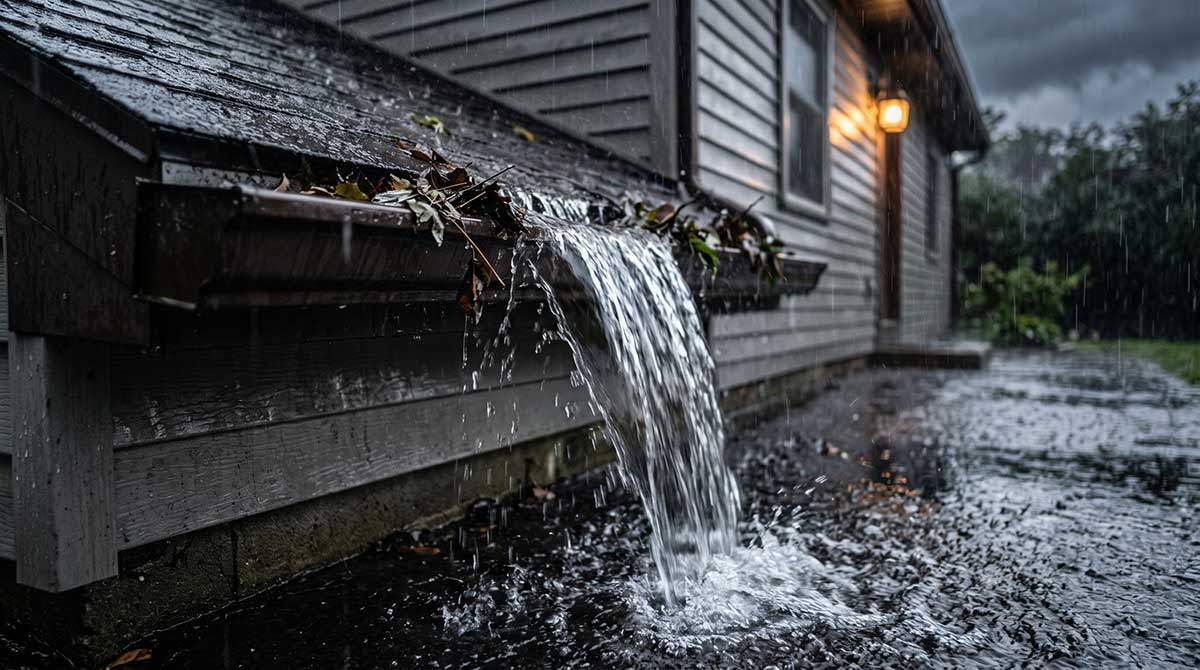
You do not need to climb a ladder to notice when something is wrong with your gutters. During or after a rainstorm, watch for these common signs that water is not moving through the system properly and that it may be time for a gutter cleaning in Edmonton:
- Water overflowing during rain: If water is pouring over the sides of your gutters instead of moving through the downspout, debris may be blocking the flow.
- Water pooling near the foundation: When gutters or downspouts cannot move water away properly, rainwater can collect around the base of your home.
- Visible leaves, twigs, moss, or seedlings: If you can see debris from the ground, there is likely more buildup sitting inside the gutter channel.
- Stains on siding, fascia, or the gutter line: Dirty streaks can be a sign that water has been overflowing in the same spot more than once.
- Sagging gutters or repeated downspout blockages: Gutters that pull away, dip, or keep backing up may need more than a quick rinse.
How to Tell If Your Downspout Is Clogged or Overflowing
When gutters overflow, the downspout is one of the first places worth checking. It may not be the whole problem, but it plays a big role in how water moves off your roof and away from your home. A few tell-tale signs that your downspout may be clogged, overflowing, or draining poorly are:
- Water spilling over near the top of the downspout: If water is pouring over the gutter right where it connects to the downspout, there may be debris blocking the opening. Leaves, twigs, moss, and roof grit can collect in that spot and stop water from entering the downspout properly. During a sudden Edmonton downpour, even a partial blockage can cause water to back up quickly.
- Little or no water coming out during rain: When rain is falling and your gutters are filling up, water should be flowing out of the downspout. If nothing is coming out, or only a small trickle appears, there may be a clog somewhere inside the pipe. The blockage could be near the top, around an elbow, or lower down where debris has compacted over time.
- Water backing up at the elbows or seams: Downspout elbows are common clog points because debris can get caught where the pipe bends. If you notice water leaking from a seam, dripping from a joint, or backing up around a bend, it may be a sign that water is trapped and looking for another way out.
- Water pooling near the foundation: A downspout can still create problems even when water is coming out. If it drains too close to the home, rainwater may collect near the foundation instead of moving away from the property. Watch for puddles, soft soil, or water flowing back toward the house after a storm.
How Can Homeowners Prevent Downspout Overflow?
The best way to prevent downspout overflow is to keep the full gutter system moving freely. That means clearing buildup from the gutter channels, checking that the downspout opening is not blocked, and watching where water exits during rain. If the downspout is trickling, backing up, or not draining at all, it may need professional attention. Winducks can clean the gutters, check the downspouts, and help restore proper drainage before the next heavy rainfall.
DIY Pressure Washing Mistakes That Can Damage Siding, Decks, and Exterior Surfaces

Pressure washing in Edmonton is tempting to tackle on your own, especially when siding looks dusty or the walkway has started to darken after weeks of summer buildup. The problem is that pressure washing is not just about pointing water at a dirty surface. The pressure level, nozzle, distance, angle, and surface condition all matter. When those details are off, a quick weekend cleanup can turn into streaked siding, marked-up decking, or water pushed into places it should not be.
- Blasting delicate surfaces with too much force: Siding, painted areas, trim, and older exterior finishes can be damaged by pressure that is too strong. The surface may look cleaner in spots, but it can also end up uneven or worn.
- Standing too close while spraying: A close spray can create harsh lines, especially on wood, composite, and softer exterior materials. It can also make the cleaned area stand out in an unnatural way.
- Using the wrong nozzle: Narrow spray tips can concentrate too much force into one area. That may help remove tough buildup, but it can also etch surfaces or strip away finishes.
- Ignoring loose paint, cracks, or aging materials: Pressure washing can make existing damage worse. If a surface is already cracked, peeling, soft, or weathered, it may need a gentler cleaning method.
- Spraying around windows, vents, and electrical fixtures: These areas need extra care. Direct pressure can damage seals, force water into gaps, or create unnecessary risk around outdoor electrical components.
- Assuming every stain needs more pressure: Some stains need the right cleaning product or method, not more force. Increasing the pressure can damage the surface without actually solving the stain.
Can DIY Pressure Washing Damage Siding?
Yes, DIY pressure washing can damage siding if the pressure is too high, the nozzle is too close, or the water is sprayed at the wrong angle. Instead of just removing dirt, too much force can loosen paint, leave streaks, dent softer materials, or push water behind the siding.
This is why pressure washing in Edmonton is sometimes better left to the professionals. While it is not uncommon for homeowners to attempt DIY pressure washing, getting your exterior surfaces professionally washed is usually the safer choice, especially when the job involves delicate materials, stubborn buildup, or hard-to-reach areas.
The experienced pressure washers at Winducks use specialized equipment and trained techniques to clean exterior surfaces more carefully than a typical DIY setup. Whether it is siding, decks, driveways, sidewalks, garage floors, or front porches, the team can choose an approach that suits the surface instead of relying on pressure alone.
Why Windows Look Dull After Smoky or Dusty Weather & How to Prevent It

Smoky or dusty weather can make clean windows look dirty much faster than expected. The change can be subtle at first. A window might look fine from outside, then appear cloudy when you are sitting indoors and the light hits it a certain way. By mid-summer, that haze can build up on the glass, screens, and edges of the window.
How Does Smoke Affect Windows?
Smoke does not always leave obvious marks, but it can settle as a thin layer on exterior glass. Once it combines with dust and rainwater, it can dry into streaks or a dull film. This is why some windows look worse after a light rain instead of better. The water moves the buildup around, but it may not fully wash it away.
How Homeowners Can Keep Windows Clearer
A simple habit is to check your windows after smoky stretches or windy days. If you notice cloudy glass, dusty screens, or grime around the frames, it may be time for a proper cleaning. Avoid blasting windows with pressure or using rough tools, since seals, screens, and frames can be easier to damage than they look.
If the buildup keeps coming back or the windows are hard to reach, booking window cleaning in Edmonton can save time and help avoid a patchy result. A professional cleaning can address the glass and the surrounding areas, so the windows look clearer instead of just briefly rinsed.
When Should Edmonton Homeowners Hire A Professional Exterior Cleaner?
Some exterior cleaning jobs are easy enough to handle with a hose, a brush, and a bit of time. Overflowing gutters, blocked downspouts, high windows, delicate siding, and pressure-sensitive surfaces can be difficult to clean safely without the right tools.
If the same issue keeps coming back after rain or a quick rinse, that is another sign the problem may need more than a surface-level cleanup.
Winducks provides all-around exterior cleaning services for Edmonton homes and properties, including gutter and eavestrough cleaning, window cleaning, and pressure washing. That means homeowners can get help with several mid-summer issues at once, from clearing gutter debris and checking downspouts to cleaning dusty windows or refreshing dirty siding, decks, driveways, and walkways.
For storefronts, managed properties, and business entrances, commercial pressure washing in Edmonton can also help keep exterior surfaces cleaner and more presentable. Get an instant quote for your service today.