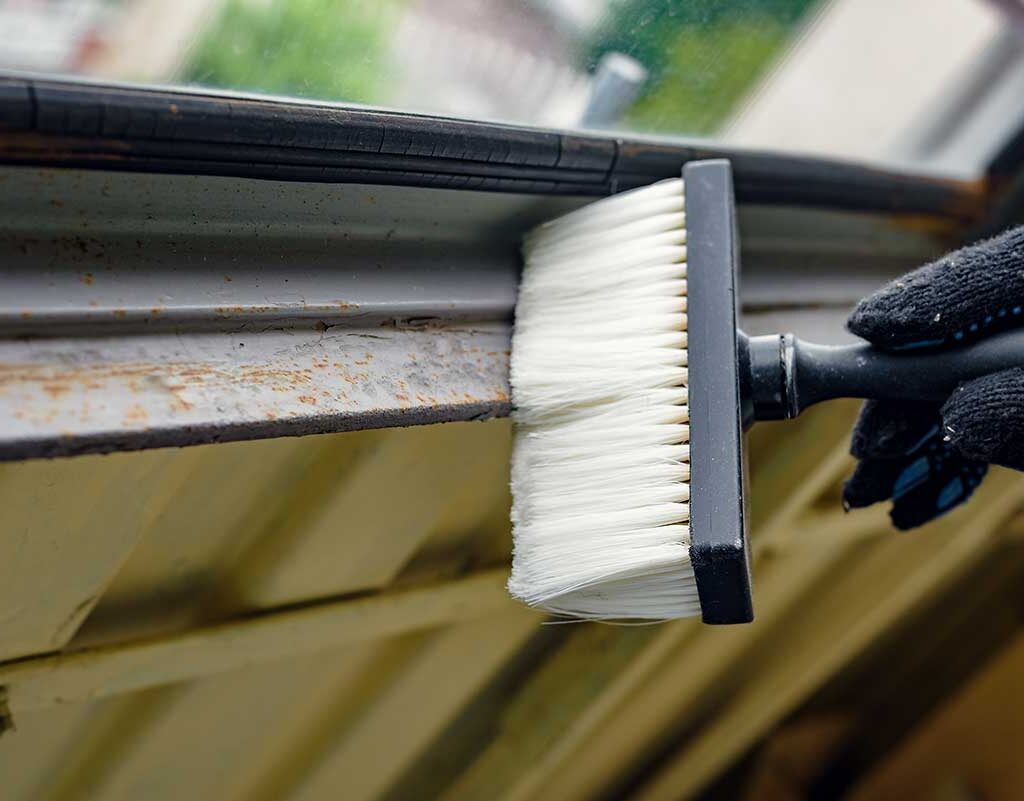
Wondering how to clean window screens without stretching the mesh? Here’s the short version: take the screens out, vacuum or brush off the dry dirt, wash both sides with mild dish soap and a soft brush, rinse gently and let them dry fully before they go back in.
Window tracks are just as simple: vacuum the loose debris, loosen the grime with baking soda and vinegar, scrub and wipe the channel, then clear the weep holes so water can drain.
The guide below covers how to clean window tracks and screens in detail, plus casement windows, sills and frames. In Calgary, all of them get dirty faster.
Why Screens and Tracks Get Dirtier in Calgary
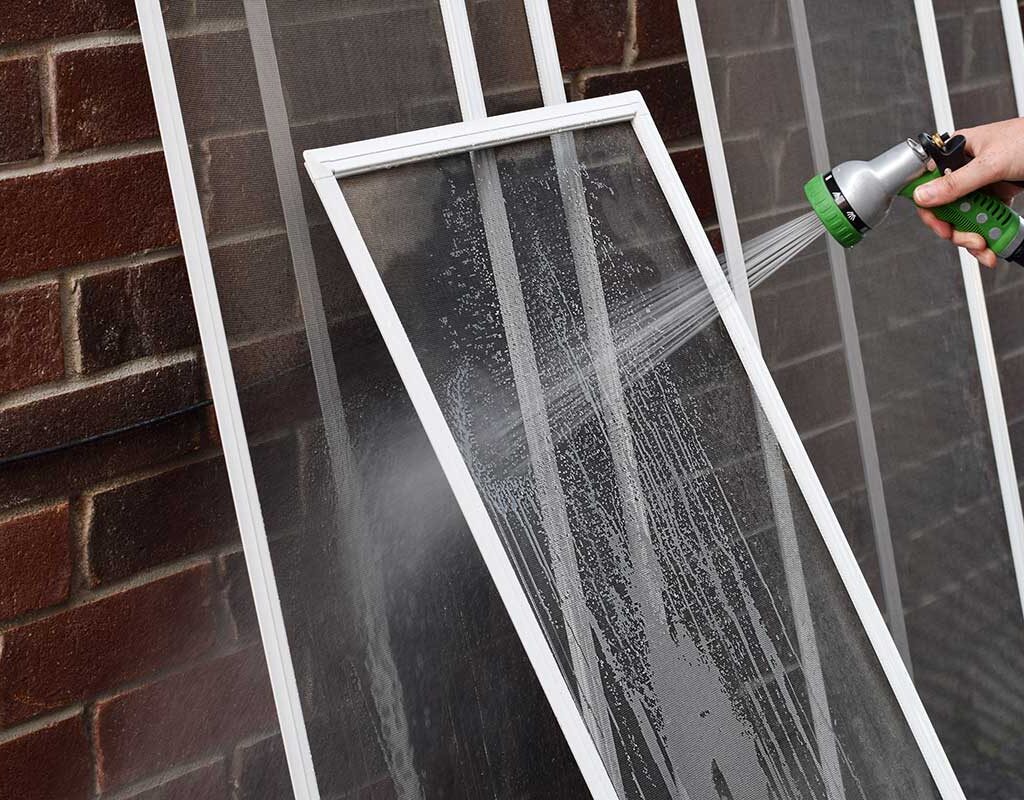
Hard water, hail, spring grit, poplar fluff and strong sun each change how you should clean.
- Hard water. Calgary’s tap water is hard, ranging from about 141 to 274 mg/L. Rinse water that dries on a frame leaves chalky spots, so towel-blot frames instead of air-drying them. For spots on the glass, see our guide to hard water spots on Calgary windows.
- Hail. The August 5, 2024, storm caused more than $3.3 billion in insured damage, and the Insurance Bureau of Canada ranks it the second-costliest disaster in Canadian history. Calgary sits in Alberta’s “Hailstorm Alley,” where hail dents aluminum mesh, tears fibreglass and shreds leaves into tracks. Check screens and tracks after every hailstorm.
- Spring grit. From mid-April, the City sweeps winter sand and gravel off more than 17,000 lane-kilometres of road. That dust blows onto screens and into tracks, so clean tracks once your street is swept.
- Poplar fluff. For a few days in late June, fluff from poplar trees, cottonwoods included, mats onto screens. Vacuum it off while it’s dry; wet fluff sticks to the mesh.
- Sun and dry air. Calgary gets about 2,400 hours of bright sunshine a year, so soapy water and vinegar dry in minutes and leave residue. Work in the shade or on an overcast day.
What You’ll Need
Most of this is already in your house:
- Vacuum with crevice and brush attachments
- Soft nylon scrub brush
- Old toothbrush
- Microfibre cloths (at least three)
- Mild dish soap, white vinegar and baking soda
- Plastic putty knife or cloth-wrapped butter knife
- Hose with a gentle spray nozzle (or a bathtub or shower)
- Old towel or drop cloth
- Painter’s tape and a marker
The best tool for cleaning window tracks is a vacuum crevice tool, plus a toothbrush and a cloth-wrapped putty knife for stuck-on grime.
How to Clean Window Screens (Step by Step)
Work on one screen at a time, on a flat surface. Plan on 10 to 15 minutes of hands-on time per screen, plus an hour or more to dry. Here’s how to clean window screens the way we do it:
- Label each screen. Put painter’s tape on the frame and write the room and window (“Kitchen, left”). Identical-looking screens often aren’t, and one in the wrong opening won’t sit tight.
- Remove from the inside where you can. Most screens pop out from inside the house (see removal tips below), which keeps you off the ladder.
- Do a dry pass first. Lay the screen on a towel and vacuum both sides with the brush attachment, so dust and bugs don’t turn to mud once water hits them.
- Wash both sides. Add a few drops of dish soap to a bucket of warm water. Scrub with a soft brush in light, overlapping strokes; mesh bends easily.
- Rinse on a low setting. Use the shower or mist setting and rinse from the top down. Never use a pressure washer; it can stretch the mesh or pop the spline, the rubber cord holding the mesh in the frame.
- Shake and blot. Tap the screen on its edge to shake off water, then towel-blot the frame so mineral spots don’t dry onto it.
- Dry fully in the shade. Lean it against a wall or fence out of direct sun.
- Inspect it. Hold it up to the light and look for tears, dents, loose spline or bent corners, especially after hail. Set damaged screens aside for your insurer or a repair shop.
- Reinstall. Match each label to its window, seat the screen and press the edges so it sits flush.
How to Wash Window Screens Without a Hose
In Calgary, outdoor taps are usually shut off for winter, and many condos have no hose. Use the bathtub instead: lay a towel in the tub, wash the screen with soapy water and a soft brush, then rinse it with the handheld shower head on a gentle setting. Dry it as above.
Fibreglass, Aluminum or Pet-Resistant Mesh?
- Fibreglass is the most common. It won’t dent but tears under pressure, so use a soft brush.
- Aluminum holds its shape but dents, creases and can oxidize, so rinse off all the soap.
- Pet-resistant mesh is tougher but traps more hair, so give it a longer dry pass.
How to Remove Window Screens by Type
- Spring plungers. Pull both pins inward together, then tilt the screen out.
- Pull tabs. Pull both tabs toward you at the same time and lift the screen free.
- Casement and awning screens. These sit inside the window; turn the clips or pull the tabs and lift them out.
- Sliding patio screens. Lift the door into the top track and swing the bottom out. If it’s stuck, loosen the roller screws at the bottom corners.
On upper floors, only remove screens that come out from inside. Never lean out or climb a ladder for one. Our guide to removing and reinstalling screens covers each type in more detail.
How to Clean Window Screens Without Removing Them
For fixed or upper-floor screens, clean from inside: run a lint roller or the vacuum brush over the mesh, wipe it with a damp microfibre cloth wrung out in soapy water, then dry the frame.
How to Clean Window Tracks (Step by Step)
Vacuum the loose debris, loosen what’s stuck with baking soda and vinegar, then scrub, wipe and clear the weep holes, the step most guides skip. Here’s how to clean window tracks:
- Open the window fully to reach the whole channel, including the corners behind the sash.
- Vacuum the loose debris. Use the crevice tool to pull out bugs, grit, leaves and spring sand.
- Fizz and soak. Sprinkle baking soda along the track, then spray it with equal parts white vinegar and warm water. Let it fizz for 5–10 minutes. On wood windows, use soapy water instead.
- Scrub the corners with the toothbrush, where grime builds up most.
- Wipe the channel. Run a damp cloth wrapped around a plastic putty knife down the track until the cloth comes out clean. For very dirty window tracks that haven’t been cleaned in years, repeat steps 3 to 5.
- Clear the weep holes. These small drain slots on the outside of the frame let rain drain instead of pooling in the track, where it can freeze when chinooks swing temperatures above and below zero. Poke a pipe cleaner through each one, then pour a little water into the track to check it drains.
- Dry the track with a cloth so no moisture sits in the corners.
- Lubricate only if recommended. Some window makers suggest a silicone spray; others say to use nothing, so check your manufacturer’s guidance.
Once the screens and tracks are done, it’s a good time to clean the glass without streaks.
How to Clean Sliding Door Tracks (With Vinegar)
Use the same method: vacuum, add baking soda and diluted vinegar, scrub, wipe and dry. Diluted vinegar is fine on aluminum and vinyl tracks. Patio doors get far more use, so check the rollers too; if the door still drags, call a door technician.
Casement and Awning Windows
These windows crank open on hinges, so dirt collects in the sill channel and on the hinge arms instead of in a sliding track.
- Crank the window fully open and vacuum the sill channel.
- Wipe the channel, hinge arms and operator arm with a soapy cloth, then dry them, keeping water out of the crank’s gear housing.
- Clear any weep holes and lubricate the hinges only with your window maker’s recommended product.
How to Clean Window Sills and Frames
Once the tracks are done, vacuum the sill. Wipe the sill and frame with warm, soapy water and a microfibre cloth, then dry both. For painted window sills, use a soft cloth, not a scrub pad, to avoid scuffing the paint.
Black or grey spots in corners are usually mildew. Spray them with undiluted white vinegar, wait an hour, then scrub and dry. Skip vinegar on wood frames and natural stone sills like marble, since the acid can dull wood finishes and etch stone; use mild dish soap instead. If spots keep returning, see our guide to mold on window sills.
A Calgary Schedule for Screens and Tracks
Clean screens and tracks at least twice a year, in late spring and fall, plus a quick check after any hailstorm. Here’s how that fits Calgary’s seasons:
| When | What to do | Why |
|---|---|---|
| Late spring, after street sweeping in your area | Full clean of tracks and screens | Removes winter sand and grit before you open windows for summer |
| After any hailstorm | Inspect screens, clear tracks | Catches tears and dents early and clears shredded leaves |
| Fall, before freeze-up | Clear weep holes, dry the tracks | Stops water from pooling and freezing in the track |
| With each professional window clean | Add screens and tracks | Clean glass looks better when the frames and screens match |
Mistakes to Avoid
Most screen and track damage comes from too much force or too little drying. Avoid these:
- Bleach or harsh abrasives. They weaken mesh and can discolour vinyl frames.
- Reinstalling damp screens. Trapped moisture on the sill leads to mildew.
- Leaving grit in the tracks. Sand wears down rollers and seals every time you open the window.
When to Call a Professional
Call a pro when screens are on upper storeys, when you have a lot of windows or when you’d rather spend the weekend doing something else. If you want window screen cleaning in Calgary, our team can add it to your next visit.
Winducks offers screen and track cleaning as add-ons to our window cleaning. We remove, wash, rinse, dry and reinstall each screen. For window track cleaning, we use a brush, a vacuum and a damp cloth. We don’t repair or replace screens; for hail damage, contact your insurer or a screen repair shop.
Book screens and tracks with your next window cleaning in Calgary, or get a free quote today. We also serve Cochrane and Edmonton.
FAQ
How often should I clean window screens?
At least twice a year, in late spring and fall. In Calgary, wait until spring street sweeping is done on your street so sand doesn’t blow right back. Add a quick check after any hailstorm, and more often near construction or a busy road.
Can I use vinegar to clean window tracks?
Yes. Spray equal parts white vinegar and warm water over a layer of baking soda, let it fizz for 5–10 minutes, then scrub and wipe. Diluted vinegar is safe on most vinyl and aluminum tracks, but not on wood or natural stone.
Can I clean screens without taking them out?
Yes. Work from inside with a lint roller or a vacuum brush attachment, then wipe gently with a damp microfibre cloth and dry the frame. It works well for fixed or upper-floor screens, but removing and washing them gives a deeper clean.
What is the best tool for cleaning window tracks?
A vacuum with a crevice attachment is the best starting tool, since it pulls out loose grit and bugs. Add an old toothbrush for corners, a plastic putty knife wrapped in a damp cloth for the channel and a pipe cleaner for the weep holes.